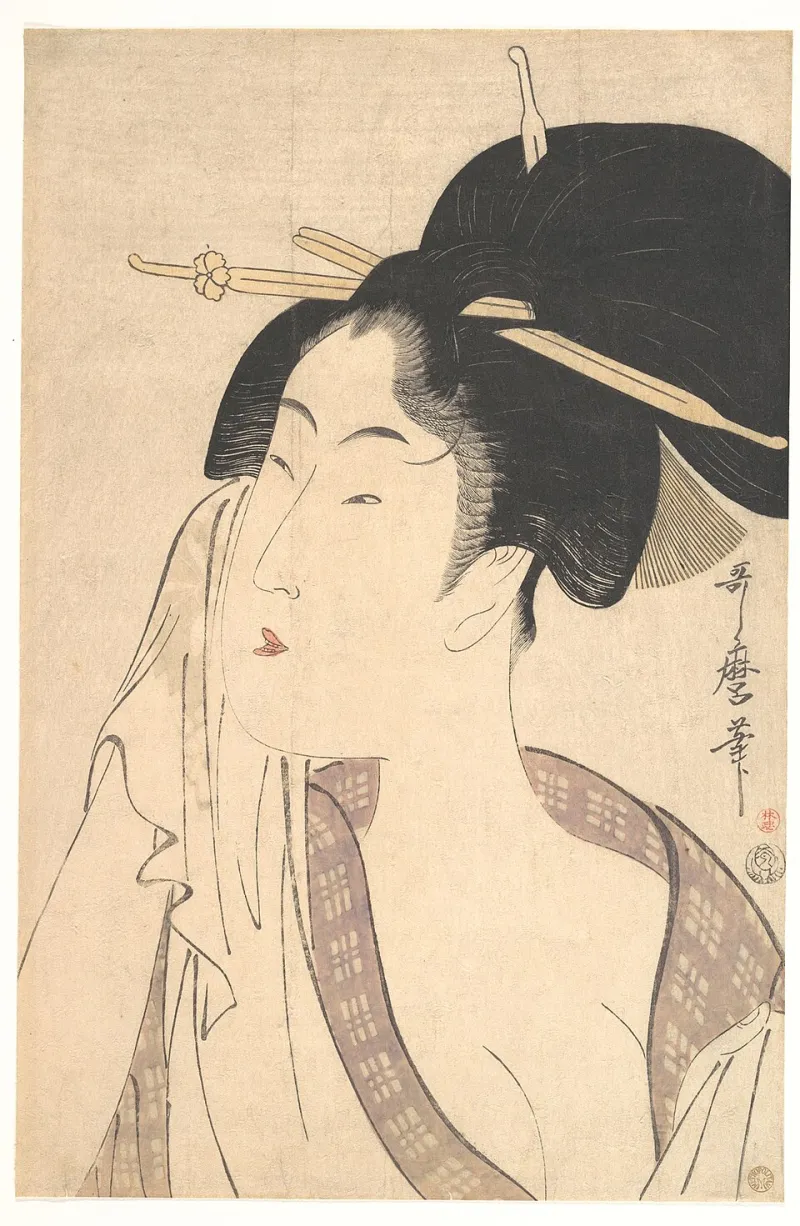
Let It Stay Open: The Quiet Relief of Not Solving Everything Tonight

Photo: Shixart1985, CC BY 2.0, via Wikimedia Commons
There's a particular kind of tiredness that comes from thinking too hard. Not the good kind — not the satisfying ache after a long hike or a big project finally shipped — but the drained, wrung-out feeling of trying to figure something out all day and getting nowhere.
If you know that feeling, you've probably spent some quality time with an open loop. A decision you can't make. A conversation that ended sideways. A question about your career, your relationship, your next ten years that keeps circling like a plane that can't find a gate.
Our instinct is to close the loop. Pick an answer. Have the talk. Land the plane. We treat unresolved things like clutter — something to be tidied before guests arrive.
But here's a thought that might feel almost rebellious: what if the loop didn't need closing? What if some things are meant to stay open for a while — maybe a long while — and the real exhaustion isn't the ambiguity itself, but our refusal to let it exist?
The Tyranny of the Neat Bow
We live in a culture that worships resolution. Podcasts promise to "unpack" everything. Think pieces end with tidy takeaways. Even our self-help comes with action steps, worksheets, and 30-day plans. Somewhere along the way, we absorbed the idea that a thoughtful person is a person with answers.
But think about the actual texture of your life. Very few meaningful things resolved themselves neatly. The friendships that mattered took years to find their shape. The career pivots only made sense in hindsight. The big feelings — grief, love, longing — never signed a closing statement.
Life is mostly a draft. And drafts are allowed to be unfinished.
Ambiguity Is Heavy Only When You Carry It Wrong
Here's the reframe that changed things for me: an unresolved question is not a problem. It's a process. The difference sounds like wordplay until you feel it.
A problem demands immediate solving. A process asks only for patience. When I treat every open question as a fire alarm, my nervous system spends all day at a sprint it never gets to finish. When I treat it as a stew simmering on the back burner — well, the stew knows what to do. It just needs time and low heat.
Psychologists sometimes talk about this as tolerance for uncertainty, and research keeps linking low tolerance to higher anxiety. In other words: the discomfort usually isn't the unanswered question. It's the gripping — the white-knuckled need to know, right now, or else.
So the practice isn't solving harder. It's loosening the grip.
Four Gentle Ways to Sit with the Open Question
1. Journal without a conclusion. Most journaling advice pushes you toward insight — write until you reach a realization! Try the opposite. Write about the thing that's unresolved and deliberately stop before you land anywhere. End mid-thought, even. You're not writing an essay with a thesis; you're letting the question breathe on paper so it doesn't have to pace around your skull at 11 p.m.
2. Let decisions ripen. For anything that isn't truly urgent, try a personal rule: the decision sits for seven days before you act. Mark it on the calendar if it helps. You'll be amazed how often the answer clarifies on its own — not because you worked harder, but because your mind kept sorting quietly in the background while you went about your week. Fruit doesn't ripen faster because you squeeze it.
3. Name the loop, then shelve it. When a nagging question surfaces during dinner or a walk, try a simple phrase: "Noted. We'll look at this Saturday." It sounds silly, but giving an open loop a named time and place tells your brain it's been heard — which is often all it wanted. The alternative, endless low-grade rumination, is just a question that never got acknowledged.
4. Practice one unresolved hour. Once a day, do something with no productive outcome and no takeaway. Sit on the porch. Wander a farmers market without a list. Watch the light move across the floor. You're training the muscle that tolerates not concluding — and like any muscle, it strengthens with gentle, repeated use.
What Stays Open, Grows
There's one more thing worth saying. The questions we force closed too soon often get answered wrong — the job taken out of panic, the friendship ended because silence felt like failure, the big life choice made just to stop the discomfort.
The questions we let stay open? They have a way of ripening into answers we couldn't have reached by force. Not always. But often enough to make patience a reasonable bet.
So tonight, if there's something unresolved rattling around in you — a decision, a conversation, a question about what's next — consider this your permission slip. You don't have to close it. You don't have to solve it before bed. You can write it down, set it on the shelf, and let it sit in the dark doing whatever unanswered things do.
Some things don't need a bow. Some things just need time — and a person willing to leave well enough alone.